Showing posts with label border issues. Show all posts

Wednesday, August 13, 2014

Cuarenta Días en el Desierto - por David Wanish


"Cuarenta días en el desierto" describe tanto a Jesús Cristo al comienzo de su ministerio, como a la comunidad cristiana durante la Cuaresma. Para mí, de ahora en adelante, también describirá a los migrantes que enfrentan un peligroso viaje a través de México cuando van en rumbo a los Estados Unidos. Durante una delegación con la organización Acción Permanente por la Paz (Witness for Peace en inglés), aprendí que los migrantes que empiezan su viaje en el sur de México o en Centro América, pueden tardar uno o dos meses para llegar a Estados Unidos.  Este viaje con frecuencia incluye caminatas a través de tramos aterradores del desierto.


Una franja muy pequeña del enorme desierto mexicano.

Durante la delegación, que tuvo lugar en el estado mexicano de Oaxaca, visitamos a un refugio para migrantes, patrocinado por la Iglesia Católica, que ofrece alimentos, atención médica, e información útil a los que buscan desesperadamente una vida mejor para sus familias. Algunas de las necesidades más comunes que tienen los migrantes que pasan por ahí son nuevos zapatos (porque se gastan rápidamente), y tratamiento médico para sus piernas, que tienen ampollas o cortadas como resultado de haber caminado tantos kilómetros a través de las plantas espinosas y de la naturaleza. Algunos migrantes mueren y algunos desaparecen en el camino.


Los delegados llegan a COMI, un refugio para
migrantes que se encuentra en la cuidad de  Oaxaca

La mayoría de los migrantes salen de sus comunidades por razones económicas. Creo que son ellos a quienes el Papa Francisco tenía en mente en su reciente exhortación apostólica, cuando describió una economía de exclusión. "Las masas se encuentran excluidas y marginadas: sin trabajo, sin posibilidades, sin ningún medio de escape" (La Alegría del Evangelio, número 53)

Papa Francisco


Las personas de Oaxaca que visitamos durante la delegación  se han sentido excluidas de las decisiones que las afectan, incluyendo las negociaciones del Tratado de Libre Comercio de América del Norte (TLCAN), ahora con 20 años de vigencia. Este acuerdo dio lugar a más exclusión: la eliminación de subsidios para la agricultura y la pérdida de la protección constitucional de sus tierras comunales. Esto último ha permitido a las empresas extranjeras comprar sus tierras y ha resultado en la explotación tanto de personas como de recursos.

Un paisaje en Teotitlán del Valle, un pueblo cerca de Oaxaca.
Muchos de sus ciudadanos viven en los Estados Unidos. 

Para muchas personas, la única opción es la migración. Nuestro grupo tuvo la oportunidad de quedarse en un pueblo donde la mayoría de las familias tienen al menos un miembro que ha emigrado a los EE.UU. Aunque los migrantes envían remesas a sus familias, su ausencia crea problemas en las comunidades, como por ejemplo el desequilibrio entre el número de hombres y mujeres en la comunidad (la mayoría de los migrantes son hombres), y la separación de los miembros de la familia.


Un muro en COMI: "Justicia para Migrantes".

El Papa señaló que la exclusión económica depende de la "globalización de la indiferencia", donde el sufrimiento de nuestros vecinos ya no nos conmueve (La Alegría del Evangelio, # 54). ¡Vamos a despertarnos! La tasa de la migración de Latinos hacia el norte es una señal de que la balanza de la justicia está desequilibrada. Encontremos la compasión para ayudar a los inmigrantes, y en solidaridad tratemos de aprender más acerca de por qué están aquí.


Para más información sobre las delegaciones a México: http://witnessforpeace.org/section.php?id=108



Monday, June 23, 2014

Tales of Migration and Detention

by James Hutter, james.hutter@gmail.com

(This blog entry is part of a series. Click these links for Part 1, Part 2 & Part 3)
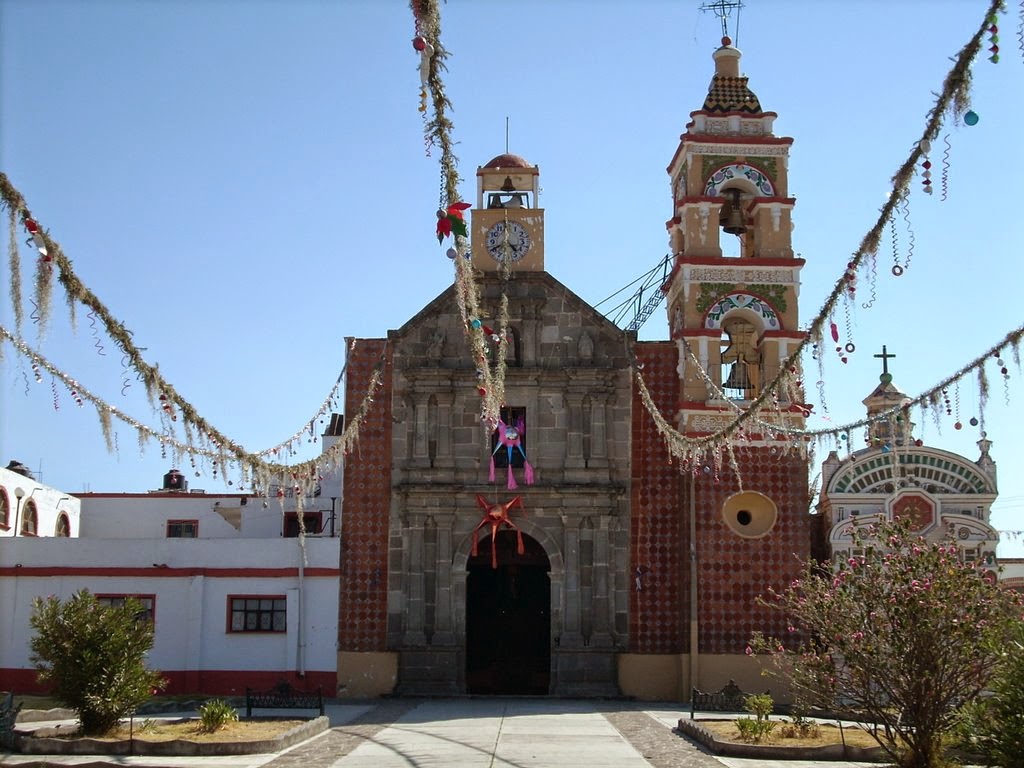
Our visit to San Francisco Tetlanohcan had been a powerful experience for many varied reasons. We saw first hand the effects that migration has had on the community – the loss of family members and the economic impact on the town. We also learned about the
group CAFAMI (Centro de Atencion a la Familia Migrante Indigena) and their efforts to share the tales of migrant families and to reverse the trend of migration. Yet, one particular event still stands out in my mind. One afternoon we had a few moments to meet with residents of Tetlanohcan to hear their personal tales of migration and their thoughts on immigration policy as a whole...
“I am the mother of 7 children in the U.S. My first went in 1990 and I have not seen him since.”
This was the first statement we heard as we gathered in a group to share stories of migration and detainment. The experience quickly turned into a highly emotional session in which residents of San Francisco Tetlanohcan tearfully told us their deeply personal tales. So impactful were these stories that many of us simply sat agasp. While we listened to tales of loved ones that had left home to migrate to the United States, it became clear to the delegation that some of the people in attendance had personally attempted to cross the Mexico-United States Border. It also became clear that a few of them had not had papers to do so.


“I tried to visit my family in the caravan through many states and the desert. I remember seeing all the crosses and thought about all of those that died and how they may have died.”

“One man on the caravan had the sad job of finding bodies. He looked for families or family members that were missing.”

The migration is not easy and it ventures through remote areas often in the vast desert. While the people leading the caravan may take different routes to avoid Mexican or U.S. Border Patrol, it is hard for migrants not to notice the sad markers from past travelers.
Travelers that survive the desert still have a high probability of being captured at the border. And while they all surely realize that they have broken the law in attempting to cross the border, almost none of them are prepared for the treatment they receive from U.S. Border Patrol agents if captured.
One woman told us that she was detained and never given any real information about her status or what Border Patrol had in mind for her. Would she be sent back quickly? Would she be imprisoned? Would something even worse happen to her? It was only after being detained for several days that Border Patrol informed her that the car she was traveling in had no license plates (hence their suspicion) and that she would be forced to testify against the smuggler who had brought her across the border. This was unsettling since many of the “Coyotes” (smugglers) now have Mexican drug cartel affiliations; testifying against a cartel member could be a death sentence. Her last hopes of safety faded even further as her Border Patrol captor told her and fellow captives that they were...
“Bitches. Fucking Mexican pieces of shit.”

A few other tales were shared and it became clear that many detained migrants are treated as less than human.
Our obvious questions were “Why are people are leaving in droves, and why would they would risk taking a potentially deadly journey?” One person responded,
“Both Governments are responsible for this... What good is educating people when there are no jobs?”

            While many felt that the U.S. has an unfair immigration policy for neighboring Mexico, there was a sense among some in the audience that the Mexican government is also responsible and has let their own people down. Both governments have failed to modify trade policies that have negatively impacted farmers in rural areas, and have depressed these regions. It's no wonder that people want to leave and look for work in new areas. And once people in the town have hit the lowest point of desperation and bravely decide to go elsewhere, their families are left to think...
“'We've lost them. We don't know if they are alive or dead. We don't know if border patrol has left them to die.”


Sunday, October 2, 2011

La Gotita Sobre el Acero: a poem in English and Spanish

By Franciso "Chavo Romero"

They call me El Chavo, and I was born and raised on the coastal city of Chiques (aka Oxnard, CA), territorio ocupado del Pueblo Chumash.

I am an organizer in the barrio... organizando spaces of resistance with la gente de abajo y a la izquierda against repression in all its forms. Soy indigena, descendant of various pueblos orginarios on this continent, Guachichile, Juchipila, Coahuila roots. Mexicano, cien porciento. Aqui estamos..y no nos vamos.

I taught middle school math and reading for 10 years, now I currently am the Events Coordinator at the Acuña Gallery and Cultural Center at Cafe on "A" in Downtown Oxnard.

As part of my commitment as a community organizer and activist I organize with Unión del Barrio and serve on the Raza Press and Media Association Editorial Board and on the Witness for Peace Southwest Regional Board and an active participant in the Todo Poder al Pueblo Collective.

The following poem was inspired by a report published last week by the organization No More Deaths. It is a report that details the "abuse, negligence and dehumanization of migrants as part of the institutional culture of the U.S. Border Patrol..."

I would like everyone to read this report, called Culture of Cruelty
. I hope it makes us think, get together, organize and fight these catastrophic violations. We are one people, Without Borders!

-Chavo
From the occupied territories of the Chumash People

El siguiente poema fue inspirado por un reporte que se publicó la semana pasada por la organización No Mas Muertes. Es un reporte que detalla sobre el “abuso, negligencia y deshumanización de migrantes que es parte de la cultura institucional de la patrulla fronteriza…”

Quiero que todos lean este reporte, nombrada Cultura de Crueldad
- Espero que nos ponga a pensar, después a reunirnos, organizarnos y luchar contra estas violaciones catastróficas. Somos un pueblo, Sin Fronteras!

~Chavo
Desde los territorios ocupados del pueblo Chumash

La Gotita Sobre el Acero (English translation below)

Tranquilamente penetra el acero,
Las gotitas de sus llantos,
Oxidándose sobre los siglos,

Cultura de crueldad e impunidad.
Los agentes brutales maltratan,
Gritándole y burlándose con abuso psicológico,

"Que se muera!"

Tirada y entumecida sobre la celda,
Manos detrás sintiendo el frió del metal,
Penetrando y picando sus huesos,

Una gotita de sangre,
Penetra el acero.

Despierta con estómago retorcido,
Come galletitas insípidas y sin sabor,
Asquerosas condiciones apestan a heces y orín,

Aire frio congela su alma,
Sin cobija y sin dignidad,
Descalza con ampollas en el corazón,
Enroscándose como un bebe,

Lagrimitas chocan con el concreto,
Cierra sus bellos ojos,
Soñando de su querido pueblito,
En el pie de la montaña.

Una gotita de sangre,
Penetro el acero.

The Droplet Upon Steel

Quietly penetrating the steel,
The droplets of her cries,
Rust over the centuries.

Culture of cruelty and impunity.

The brutal agents mistreat,
Shouting and laughing with psychological abuse,

"Die!

Thrown and numb in the cell,
Hands behind feeling the cold of the metal.
Penetrating and biting her bones,

A droplet of blood,
It penetrates the steel.

Waking up with stomach twisted,
Eating crackers bland and tasteless,
Filthy conditions stink of feces and urine.
Cold air freezes her soul,

Without a blanket and without dignity,
Barefoot with blisters in her heart.
Curling like a baby,

Tears collide with the concrete.
Closing her beautiful eyes,
Dreaming of her beloved town,
At the foot of the mountain.

A droplet of blood.
Penetrates the steel.