
by Sue Davis (WFP Mexico Program delegate)
“If you promise a girl heaven, you can take her to hell.” (Quote from a human trafficker overheard by human rights attorney Malika Saada Saar.)
This quote took on many layers of meaning as our group encountered various human rights violations in Mexico. And who was our group? A delegation of seven members from Plymouth United Church of Christ and one Quaker from Des Moines, Iowa, embarked on a Witness for Peace experience in Mexico. The focus of our trip was the issue of human trafficking, which we found to be deeply connected to other issues of economic and social justice, both in Mexico and the United States. Our Witness for Peace facilitator, Maggie, engaged speakers and created experiences that allowed us to understand the context in which the phenomenon of human trafficking occurs and to connect personally with Mexicans and Americans fighting for justice on the frontlines.
“Tan lejos de Dios, tan cerca de Estados Unidos.” (“So far from God, so close to the U.S.”)
Francisco Cerezo, our first speaker, quoted this phrase when he explained the cause of many human rights violations in Mexico. He was speaking from his personal experience of working for the freedom of three of his brothers, who had been illegally arrested and imprisoned in 2001.The government had trumped up charges against them of terrorism. Through the diligent efforts of their lawyer, Digna Ochoa, the youngest brother was freed after three years, and the older two after seven years of incarceration and torture. Comité Cerezo - which consists of the five Cerezo siblings as well as many collaborators - has established a center (named after the lawyer) for aiding other victims of human rights violations. Francisco’s fourteen years of experience have led him to see how U.S. policies, especially the Mérida Initiative - meant to combat drug trafficking and organized crime - have increased human rights violations in Mexico. According to the fact sheet issued by Witness for Peace about the Mérida Initiative, aka Plan México, the 2.4 billion dollars appropriated by Congress to train Mexican state security forces and to deliver military aircraft and drug interdiction equipment have coincided with a five-fold increase in complaints of human rights violations by Mexican soldiers and federal police, including torture, rape, extrajudicial execution, arbitrary detention, and enforced disappearance. Almost none of these cases have been prosecuted. The impunity rate in Mexico is between 95 and 98%. According to Francisco Cerezo, the culture of impunity continues because an extensive network exists among businessmen, the government, and organized crime. In spite of the odds and multiple death threats, Comité Cerezo continues to document human rights violations in Mexico and to find ways to prevent them.

“I felt anger and denial.” Maru’s emotions during the four-five years that it took her to feel that she had made the right decision to return to Mexico after having lived in the United States from the age of eight through the completion of her college education in New York.
We had the opportunity to hear the personal stories of six young people who had lived in the United States with their parents but were undocumented. Either they returned to Mexico voluntarily when they recognized the limitations that their undocumented status placed on their future, or they were deported. Having spent their formative years in the U.S., all of these young people faced discrimination and red tape when they returned to Mexico. The authorities did not recognize their high school or college educations. The young people often felt anger and denial for a long time before they were able to adjust to life in Mexico. Most had to live with relatives other than their immediate family and sometimes did not feel welcomed by them. In 2013 an organization called Dream in Mexico was formed to help returnees find educational, cultural and career opportunities in their native country. In turn, our group felt anger and dismay that our country has not found a humane way to treat undocumented immigrants who have lived in the U.S. for many years and who have a lot to contribute to our society.
Did you know that Pinocchio and Little Red Riding Hood are tools to educate young children about human trafficking and the vulnerability of victims?
Our speaker, Mayra Rojas, founder and director of an organization called Infancia Común, opened our eyes to the problem of human trafficking of children in Mexico. She claimed that prevention through education is the best measure to take, since rehabilitation of the victims of human trafficking is practically impossible. The statistics of the number of people affected by the problem are not accurate because there is no collaboration among agencies. The last study in 1999 claimed 16,000-20,000 children under the age of 18 were victims, and the numbers have been trending upwards ever since. The poverty of many Mexicans has made it easy to entice them to allow trafficking because they need the money. The consumer mentality of having or needing more has invaded the culture. International laws exist to prevent human trafficking, but they need to be stronger.

120 changes were made to the Mexican constitution to accommodate NAFTA.
This astounding fact was pointed out to us during Maggie’s summary of the history of U.S.-Mexico economic relations. One of the major changes was the allowing the sale and privatization of ejidos, which are communally owned lands that had been created by breaking up the ancient haciendas and which were never intended to be confiscated or sold. In addition, on June 1st, 1994, the day NAFTA went into effect, there was a Zapatista uprising. Among other issues they were protesting the elimination of tariffs and protections for Mexican grown corn. Now, in Mexico, the birthplace of corn and a country whose dietary staple is corn, over 35% of corn consumed is imported from the U.S. NAFTA has been devastating for small farmers. Farmers from the southern state of Oaxaca have moved north to Baja California or the U.S. to work the fields. All this migration destroys the social fabric of the country. In addition, after a perfect storm of economic conditions in Mexico in the early ‘80’s, the IMF swept in with a 7.2 billion dollar loan in 1982 and insisted that the social safety net be dismantled. This has not done much too improve the lives of the 60 million Mexicans, almost half of the population, who are living in poverty. This poverty has pushed 1 in 10 Mexicans to migrate to the U.S.
“The drug cartels know that drugs can only be sold once, but women can be sold again and again and again,” says Teresa Ulloa, director of the Coalition Against Trafficking in Women and Girls in Latin America and the Caribbean.
This was a point brought up by Gaby, the director of Casa Tochan, a shelter for refugees and migrants from Central America who either intended Mexico or the U.S. as their final destination. After 9/11 in the U.S., the closing of the U.S.-Mexican border caused a bottleneck in the flow of migrants, principally from Central America, in Mexico. Consequently, thousands of people were put at high risk due to a lack of safety nets of families and gainful employment to support them. It’s a very complex issue, but generating magnets for growth in their countries of origin and improving their educational opportunities would eliminate the need to emigrate.
In the meantime, Mexico has built steel barriers along the south-north rail tracks to obstruct the hopping of the train by migrants. The consequence of this policy is the increased number of migrants taking the entire journey through Mexico by foot along dangerous routes well known to human traffickers and drug cartels. Women who stop at a shelter near the southern border of Mexico are given contraceptive vaccinations because they most certainly will suffer rape and abuse along the way. Gaby, who runs the shelter, wants to prevent human traffickers from posing as migrants and then exploiting the residents by enticing them with false promises that lead them into lives serving the drug cartels and human traffickers, who often work in tandem. Migrants and refugees have been coerced into growing, making or transporting illegal drugs for the cartels or have been enslaved as domestic workers and sex slaves for them. The cartels have found it more lucrative to sell women for sex than to sell drugs.
Here is a common migrant worker’s story: I paid a recruiting fee of $500 to work at a meatpacking plant, I paid a visa fee of $950, (it’s actually $190), I paid my transportation costs to the U.S., I paid for my hotel room while waiting for approval from the embassy, and I paid for travel costs to the final work site.
Sarah Farr of the Center for Migrant Rights, which has two offices, one in Baltimore and one in Mexico City, related this story to us as she explained the H2 visa system of the United States to us. We discovered that H2A visa workers in the agricultural sector have a lot more protections than those that come to work on a H2B visa. The H2B visas encompass such businesses as landscaping, forestry (cutting Christmas trees), and carnivals. Unlike businesses recruiting under H2A visas, H2B companies do not have to reveal who their migrant labor recruiters are. This right to hide their recruiters was supported by JKJ Workforce, which is an American agency that recruits for carnivals and is owned by Jim Judkins in Texas. He has formed the Outdoor Amusement Business Association, which has joined forces with landscaping businesses to form a powerful lobbying group. They have prevented the strict enforcement of labor laws, such as not providing a list of their labor recruiters. Their labor recruiters are subcontractors in Mexico that often resort to fraud to line their own pockets by charging workers recruitment fees. These are prohibited both by the U.S. Dept. of Labor and the Mexican government. Over 50% of workers actually pay these illegal fees. Carnival workers often work 100 hours per week in 36-hour shifts with no time to sleep. Their pay is not commensurate with their hours because weekly flat-rate wages are permitted in H2B visas. The fair and carnival industry is the only one exempt from a minimum wage requirement. Ten carnival workers might be crowded into living in one trailer with no kitchen or bathroom. They have to cook on hotplates outdoors. As a further insult, there is no safety protection when they erect and tear down the equipment. Many have suffered great bodily injury in accidents. How can a democracy allow a powerful lobbying group to effect policy that denies basic human dignity to workers who have come here with legal documents?
“Mexico is a clandestine cemetery. There are mass graves everywhere.” (Quote from Araceli Rodriguez)
Araceli Rodriguez came to talk to our group about her son Luis Angel, a federal policeman, who was disappeared at the age of 23 on November 16, 2009. He and six other federal policemen and one civilian were disappeared on their way to Hidalgo, Michoacán, where the policemen were commissioned to occupy the building of the municipal director because his life was being threatened. At 3:00 on November 16 they were kidnapped by the cartel Michoacán, which is now known as the Caballeros Templarios (Knights Templar). The government didn’t know that the seven men were missing until 6 days after the kidnapping. Araceli went directly to the government office to inform the officials that the policemen were missing and to ask about the welfare of her son. Armed men in the office took her and threw her out on the street. The government didn’t have any information about the missing 7 people.
Thus began Araceli’s quest to find justice for her son. Besides the perpetrators of the kidnappings and killings who have been convicted, three levels of government, (state, federal, county), were complicit in this case, but no one has been charged criminally or civilly. Araceli is still pushing to try them in court and says that she’ll never give up. A major problem is the distrust of the police and government officials because you don’t know if you’re actually talking to someone involved in organized crime or to someone who is trustworthy. Corruption is prevalent at all levels of government and police.

Drug trafficking and human trafficking have contributed to the ubiquitous corruption and high rate of impunity. The drug cartels have stocked up on weapons and have the means to pursue human trafficking and organ trafficking. By way of human trafficking, the cartels have kidnapped victims to manufacture the drugs and to transport them. Thousands of Mexicans who are disappeared probably are not dead. The authorities know this because they are part of the cartels themselves. Of course, it is not to their advantage to have this exposed.
How does a community function when 30-40% of its families have migrating members?
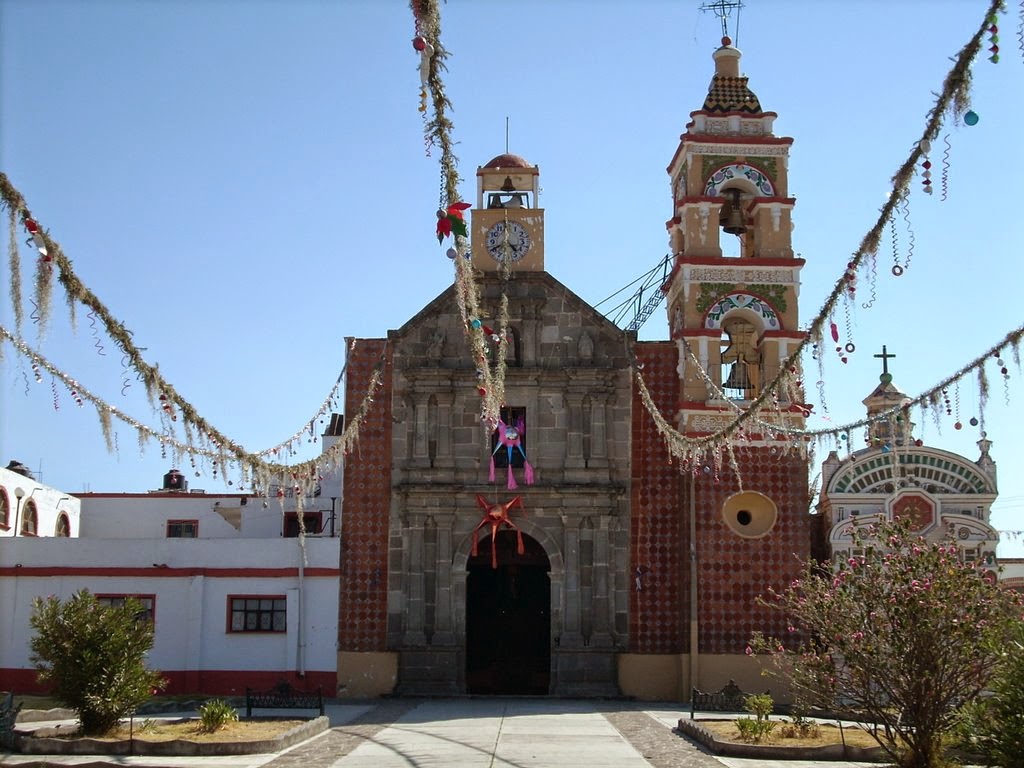
The answer to this question is an organization called CAFAMI in San Francisco Tetlanohcan in the state of Tlaxcala. CAFAMI is a local organization that, primarily through theater and community projects, seeks to mitigate the phenomenon of migration and its impact on women and families. The consequences of migration are separated families and women searching for employment and having total responsibility for raising their families. Often the grandparents are in charge of raising their grandchildren. CAFAMI has striven to reduce the negative effects of migration by encouraging leadership among the women of the community and giving them the opportunity to develop their rights as citizens. CAFAMI is a place where women can reflect on the social impact of migration on their personal lives and on community life. The women reconstruct their identities through dancing, singing, acting, and cooking. An advantage of the group’s theatrical and cultural activities is their ability to travel to the U.S. to present their heritage. Once there, they can visit their relatives who have immigrated to the U.S. The Mexican government has mostly ignored the effects and causes of migration. To counter the government’s inaction, CAFAMI has joined 3 other organizations as a collective voice known as Colectiva sin Fronteras to work together to push for stronger laws protecting migrants and their families.

“There are boys who want to grow up to be traffickers, but there are no girls who want to grow up to be prostitutes.” (Quote from Emilio Muñoz)
How can it be that there are boys who want to grow up to be traffickers? According to Emilio Muñoz, the director of the Center for Human Rights and Local Development "Fray Julian Garcés" in Tlaxcala, there are entire family trafficking networks operating today that began with the grandfather and that have been maintained by subsequent generations. The adolescent boys in these families actually aspire to be traffickers. The role of the young men in trafficking families is to put psychological pressure on vulnerable young women by first showing up in a poor village in an expensive car. He claims to be in love with a young woman and shows her photos of the expensive houses he owns. He showers her with gifts and constantly sends her text messages. He claims that the girl is the woman of his dreams and that he wants to marry her. He even meets the girl’s family and impresses them by organizing birthday parties for family members and by bringing them food. Consequently, the family is convinced to allow the union of the trafficker and the young girl to go forward. After the wedding, he moves her to his community. Upon their return, his next step is to get her pregnant. The girl’s child or children stay in the trafficker’s home and are cared for by his female relatives. The children’s lot in life is to continue the trafficking network of the family.
Since 1990, a common theme has been for the trafficker to move with his “wife” to a city, often in the U.S. and most commonly to New York. Once in the city, the trafficker invents an economic crisis and convinces the girl that the only way to get out of the situation is for her to become a prostitute. To protect her “husband’s” life, she will sacrifice whatever is necessary. This is a cultural expectation. If she refuses to become a prostitute, the trafficker threatens her child, her family or even her younger sister by capturing her and forcing her into prostitution. The women stay in prostitution for 10-15 years. They have up to 30 clients per day. They are able to work every day of the week because the traffickers give them medication to stop their menses.
Of course, there have to be clients or consumers to complete the human trafficking cycle. The current trend of neo-liberal thought promotes accumulation of capital. Trafficking has commercialized women’s bodies, which can be sold repeatedly to bring in money. People look at the victims’ bodies as a market. The consumers of the market are willing to spend money on prostitution of these trafficked women. According to Emilio Muñoz, everything has become a marketable item: Mexicans’ bodies, Mexican land, their water and air. For Mexicans, these things are not commodities but are considered sacred and a source of life.




 Posts
Posts


