
by James Hutter, james.hutter@gmail.com
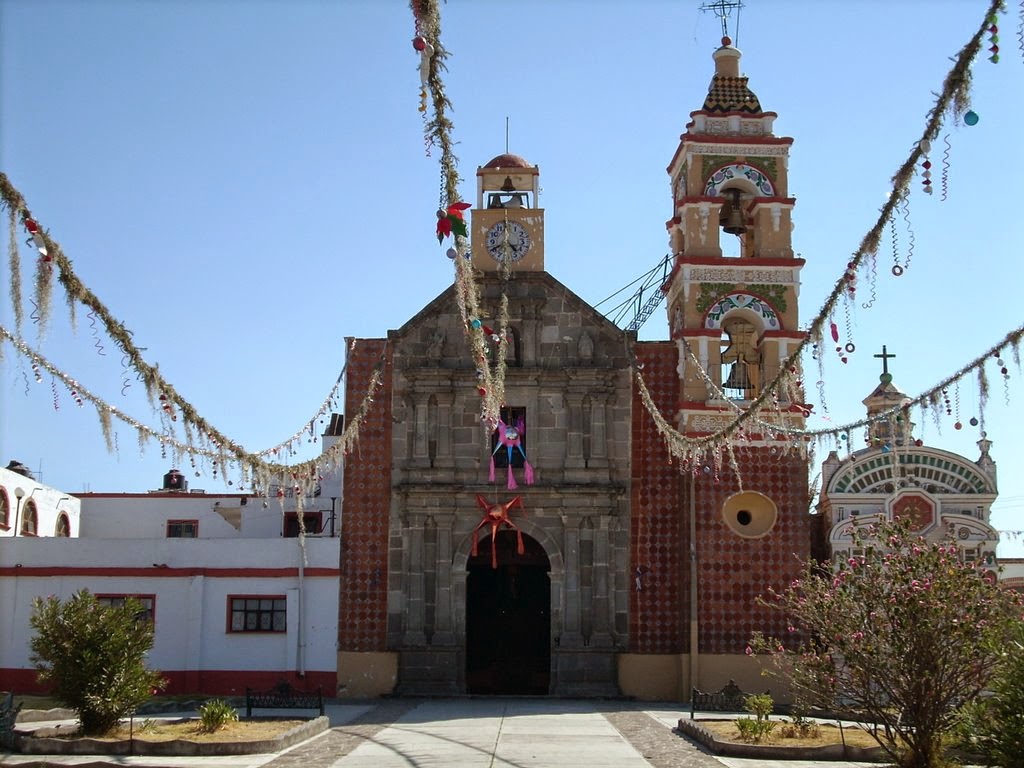
Our visit to San Francisco Tetlanohcan had been
a powerful experience for many varied reasons. We saw first hand the effects
that migration has had on the community – the loss of family members and the
economic impact on the town. We also learned about the
 group CAFAMI (Centro de Atencion a la Familia Migrante Indigena) and their efforts to share the tales
of migrant families and to reverse the trend of migration. Yet, one particular
event still stands out in my mind. One afternoon we had a few moments to meet
with residents of Tetlanohcan to hear their personal tales of migration and
their thoughts on immigration policy as a whole...
group CAFAMI (Centro de Atencion a la Familia Migrante Indigena) and their efforts to share the tales
of migrant families and to reverse the trend of migration. Yet, one particular
event still stands out in my mind. One afternoon we had a few moments to meet
with residents of Tetlanohcan to hear their personal tales of migration and
their thoughts on immigration policy as a whole...
“I am the mother of 7 children in the U.S. My first went in 1990 and I
have not seen him since.”
This was the first statement we heard as we
gathered in a group to share stories of migration and detainment. The
experience quickly turned into a highly emotional session in which residents of
San Francisco Tetlanohcan tearfully told us their deeply personal tales. So
impactful were these stories that many of us simply sat agasp. While we listened to tales of loved ones that
had left home to migrate to the United States, it became clear to the delegation that some of the people in attendance had personally attempted to
cross the Mexico-United States Border. It also became clear that a few of them
had not had papers to do so.

“I tried to visit my family in the caravan through many states and the
desert. I remember seeing all the crosses and thought about all of those that
died and how they may have died.”
“One man on the caravan had the sad job of finding bodies. He looked for families or family members that were missing.”
The migration is not easy and it ventures through remote areas often in the vast desert. While the people leading the
caravan may take different routes to avoid Mexican or U.S. Border Patrol, it is
hard for migrants not to notice the sad markers from past travelers.
Travelers that survive the desert still have a
high probability of being captured at the border. And while they all surely
realize that they have broken the law in attempting to cross the border, almost
none of them are prepared for the treatment they receive from U.S. Border
Patrol agents if captured.
 One woman told us that she was detained and
never given any real information about her status or what Border Patrol had in
mind for her. Would she be sent back quickly? Would she be imprisoned? Would
something even worse happen to her? It was only after being detained for
several days that Border Patrol informed her that the car she was traveling in
had no license plates (hence their suspicion) and that she would be forced to
testify against the smuggler who had brought her across the border. This was
unsettling since many of the “Coyotes” (smugglers) now have Mexican drug cartel
affiliations; testifying against a cartel member could be a death sentence. Her
last hopes of safety faded even further as her Border Patrol captor told her
and fellow captives that they were...
One woman told us that she was detained and
never given any real information about her status or what Border Patrol had in
mind for her. Would she be sent back quickly? Would she be imprisoned? Would
something even worse happen to her? It was only after being detained for
several days that Border Patrol informed her that the car she was traveling in
had no license plates (hence their suspicion) and that she would be forced to
testify against the smuggler who had brought her across the border. This was
unsettling since many of the “Coyotes” (smugglers) now have Mexican drug cartel
affiliations; testifying against a cartel member could be a death sentence. Her
last hopes of safety faded even further as her Border Patrol captor told her
and fellow captives that they were...
“Bitches. Fucking Mexican pieces of shit.”
A few other tales were shared and it became clear that many detained migrants are treated as less than human.
Our obvious questions were “Why are people are
leaving in droves, and why would they would risk taking a potentially deadly
journey?” One person responded,
“Both Governments are responsible for this... What good is educating people when there are no jobs?”
While many felt that the U.S. has an unfair immigration policy for neighboring Mexico, there was a sense among some in the audience that the Mexican government is also responsible and has let their own people down. Both governments have failed to modify trade policies that have negatively impacted farmers in rural areas, and have depressed these regions. It's no wonder that people want to leave and look for work in new areas. And once people in the town have hit the lowest point of desperation and bravely decide to go elsewhere, their families are left to think...
“'We've lost them. We don't know if they are alive or dead. We don't
know if border patrol has left them to die.”


 Posts
Posts


